
A resume can tell you where someone has worked. An interview can tell you how well they prepare. A disc profile helps answer a different question – how is this person likely to behave on the job when the pressure is real, the pace is fast, and the role requires day-to-day consistency.
That distinction matters because many hiring and development decisions fail in execution, not intent. Candidates often look qualified on paper. Employees may have the technical skills to perform. The issue is behavioral fit: how they communicate, respond to urgency, handle structure, influence others, and operate within a team. A disc profile is designed to bring that part of the picture into focus.
What a disc profile measures
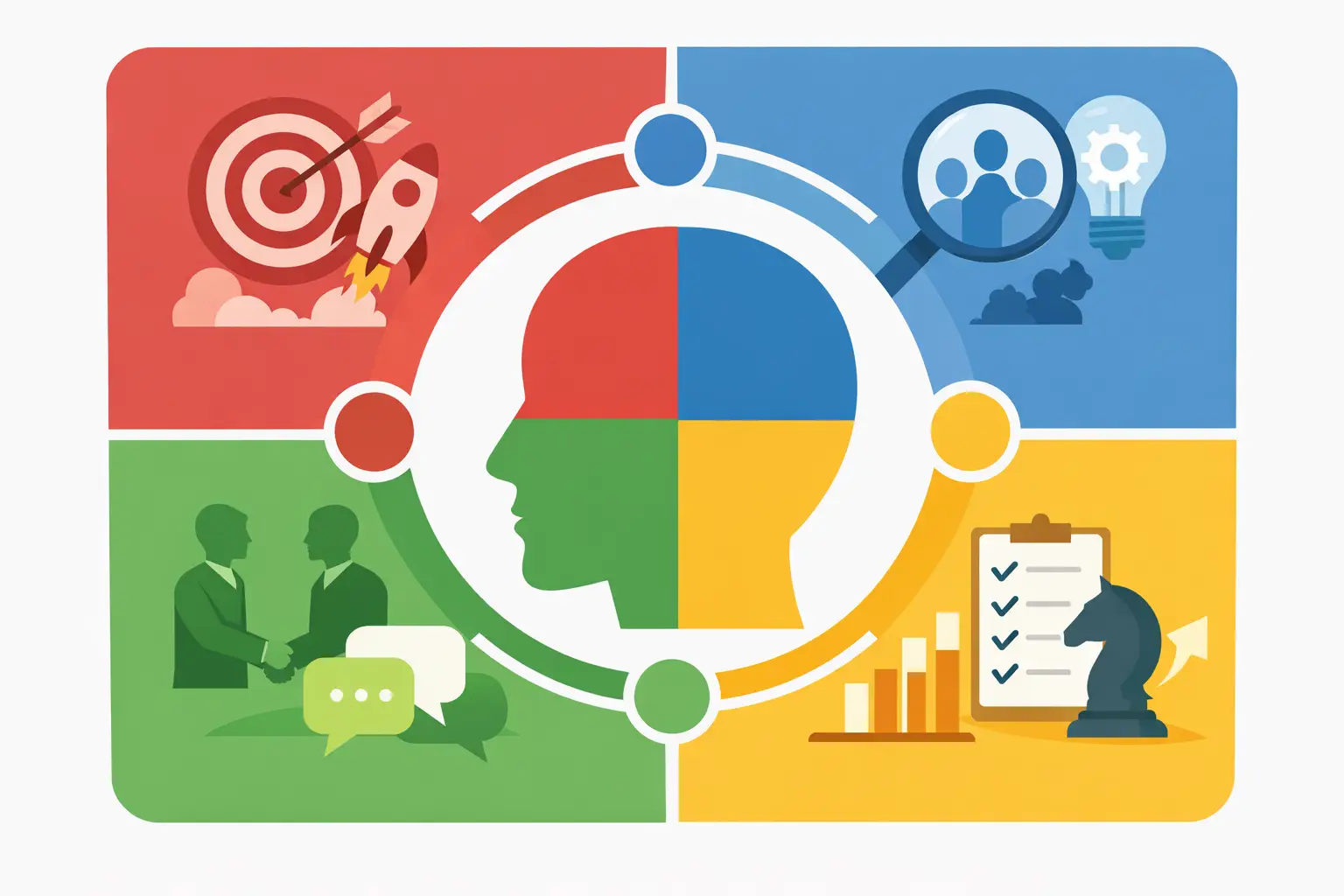
A disc profile is a behavioral assessment built around four broad dimensions of observable workplace behavior: Dominance, Influence, Steadiness, and Compliance. These dimensions do not measure intelligence, values, mental health, or skill level. They measure tendencies in how a person prefers to approach work and interact with others.
Dominance reflects how someone responds to problems and challenges. Higher D styles often prefer speed, control, and direct action. Lower D styles may take a more measured, collaborative approach and are often less driven by competition.
Influence reflects how someone relates to and persuades people. Higher I styles are typically more verbal, expressive, and relationship-oriented. Lower I styles may be more reserved, factual, and selective in how they engage.
Steadiness reflects pace and consistency. Higher S styles often value stability, cooperation, and predictability. Lower S styles may be more comfortable with change, urgency, and frequent variety.
Compliance reflects how someone responds to rules, standards, and detail. Higher C styles often emphasize accuracy, structure, and risk reduction. Lower C styles may be more flexible, less formal, and more willing to act with limited data.
The practical value is not in labeling people. It is in understanding where a person is likely to feel natural, where they may experience friction, and how those tendencies align with the demands of a role.
Why the DISC profile still matters in talent decisions
Behavioral assessment has stayed relevant because managers still face the same core problem: two people with similar resumes can perform very differently in the same role. One gains traction quickly. The other struggles with pace, conflict, structure, or stakeholder relationships.
A DISC profile helps reduce that uncertainty. It adds a structured view of behavior that interviews alone often miss. For HR leaders and hiring managers, that means better conversations, more precise onboarding, and stronger alignment between job demands and work style.
In development settings, the value shifts from selection to self-awareness. Employees who understand their natural style often communicate more effectively, manage conflict with less friction, and adapt faster when role expectations change. For leaders, the tool can clarify why one direct report needs autonomy while another needs more structure and follow-through.
That said, usefulness depends on how the profile is applied. A disc profile should inform decisions, not make them in isolation. It works best as part of a broader assessment process grounded in role requirements, validated measures, and sound judgment.
How to use a disc profile in hiring
In hiring, the biggest mistake is treating DISC as a shortcut to a yes-or-no decision. That is not what it is built for. A disc profile is most effective when used to compare behavioral tendencies against the real demands of the job.
For example, a high-volume sales role may reward urgency, social confidence, persistence, and comfort with rejection. A quality control role may require consistency, precision, and adherence to process. A customer service supervisor may need a blend of patience, communication skill, and enough assertiveness to manage escalation. The right style is situational.
This is why job fit matters more than any single style pattern. A high D profile is not automatically better than a high S profile. A high I style is not always ideal for every client-facing role. In some environments, a calm, structured communicator will outperform a highly outgoing one. The key question is whether the behavioral pattern supports success in that specific context.
When used well, a disc profile improves interview quality. Instead of relying on generic questions, hiring teams can probe likely risk areas. If a candidate shows very low preference for structure, ask how they manage compliance-heavy work. If they appear highly steady and change-averse, ask how they handle shifting priorities. This makes interviews more targeted and more predictive.
Using DISC for development and leadership
After the hire, the same data can support better management and development. Employees do not fail only because they lack skill. They often struggle because the way they are managed does not match how they absorb information, make decisions, or stay motivated.
A disc profile can help managers adjust communication without lowering standards. A high D employee may want the headline, the objective, and the authority to move. A high C employee may need fuller context, clear expectations, and time to verify details. A high I employee may respond well to collaboration and recognition. A high S employee may perform best with consistency, support, and clear transition planning.
This is especially useful in leadership development. Many leadership problems are not technical problems. They are behavioral problems expressed through poor delegation, conflict avoidance, inconsistent follow-up, or an inability to adapt style across team members. DISC gives leaders a framework for seeing those tendencies clearly.
For consultants and coaches, that makes the profile a practical starting point. It turns vague feedback into usable language. Instead of saying a leader is difficult, you can discuss how a strong D pattern may be landing as overly forceful under stress. Instead of calling someone resistant, you can explore how a high S style may need more predictability during change. That shift improves accountability because it is specific and actionable.
Where a disc profile helps most – and where it does not
A disc profile is strongest when the goal is to understand behavior in the workplace. It is useful for selection discussions, coaching, communication, team dynamics, and role alignment. It helps organizations see how people are likely to show up, especially under normal work pressure.
Its limits are just as important. DISC does not tell you whether someone can do the job. It does not measure cognitive ability, job knowledge, motivation, integrity, or values alignment. It also should not be used to stereotype people or force them into rigid categories.
People are more flexible than their profile suggests. Context changes behavior. Experience changes behavior. Accountability changes behavior. A person may have a natural tendency toward caution and still learn to operate effectively in a faster, more ambiguous role. Another may be highly assertive and still fail if they lack judgment or discipline.
That is why organizations get better results when they pair a disc profile with other validated tools and structured hiring practices. Behavioral insight is valuable, but decision quality improves when it is combined with additional data points such as job match, sales capability, 360 feedback, reference information, and role-specific competencies.
Choosing a DISC profile approach that supports decision quality
Not all assessments are equally useful. For buyers evaluating DISC-based solutions, the real issue is not whether the model is familiar. It is whether the assessment is dependable, easy to interpret, and relevant to business decisions.
A good DISC solution should produce clear, usable reports that managers and consultants can apply without guesswork. It should support both hiring and development use cases. It should also fit into a broader talent process rather than operating as a standalone personality exercise.
Validation matters here. If the assessment is being used to influence hiring, promotion, coaching, or succession decisions, organizations need confidence that the tool is consistent and professionally designed. Ease of use also matters. If the report is too abstract, it will sit in a file instead of improving performance.
For companies that want one system to support pre-hire and post-hire decisions, this integrated approach becomes even more valuable. Behavioral data becomes more powerful when it is not trapped in a single transaction but carried across the employee lifecycle. That is where providers like Maximum Potential often create more business value – by helping organizations use assessment data as part of an ongoing talent strategy, not a one-time test.
The real value of a disc profile
The real value of a disc profile is not that it tells you everything about a person. It is that it tells you something useful, consistent, and job-relevant that many organizations otherwise leave to instinct.
That matters because instinct is uneven. Some managers read people well. Many overestimate that ability. A structured behavioral profile creates a better starting point for hiring, coaching, and team performance because it replaces assumptions with observable patterns.
Used responsibly, DISC helps organizations ask better questions, set clearer expectations, and manage people in ways that improve fit and performance. That is often enough to prevent avoidable hiring mistakes and strengthen development efforts across the business.
If you want better talent decisions, start by getting more precise about behavior. A disc profile will not replace judgment, but it can make that judgment far more reliable.












Leave A Comment