
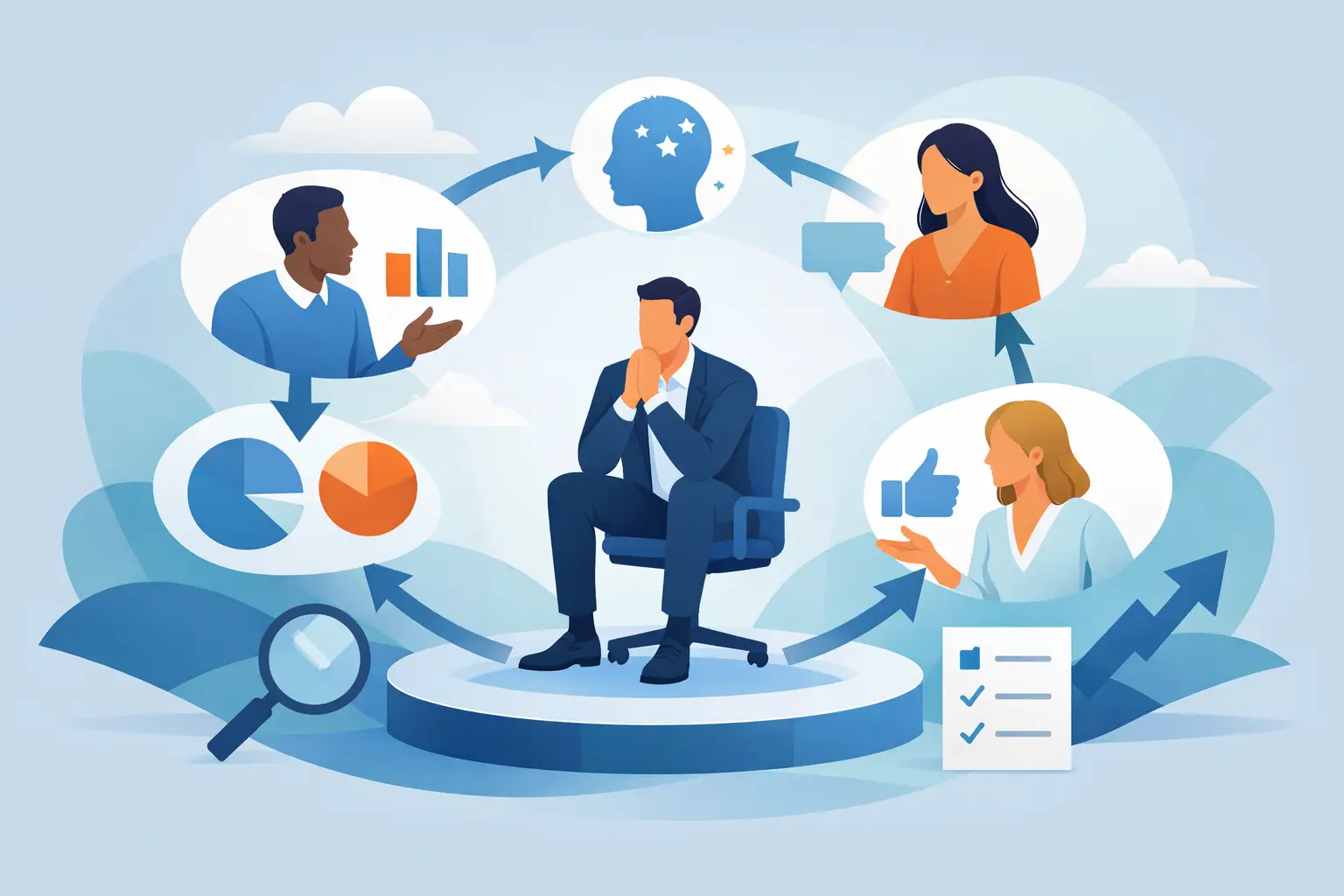
A leader gets promoted because of performance, judgment, and technical credibility. Then the role changes. Success starts depending less on individual output and more on how that person influences others, handles pressure, communicates direction, and builds trust across the organization. That is where 360 feedback for leadership development becomes useful – not as a generic survey exercise, but as a structured way to identify how leadership behavior is actually experienced by the people around it.
For HR leaders, consultants, and executive coaches, the value is straightforward. Leadership capability is hard to improve when the only input comes from self-perception or a manager’s opinion. A well-designed 360 process adds a broader evidence base. It helps organizations spot behavioral patterns, target development investments, and support better decisions about coaching, succession, and readiness for larger responsibility.
What 360 feedback for leadership development is really measuring
At its best, a 360 assessment does not measure popularity. It measures observable leadership behaviors from multiple perspectives, typically including the leader, manager, peers, direct reports, and sometimes internal or external stakeholders. The point is not to create a score for its own sake. The point is to compare intent with impact.
That distinction matters. Many leaders believe they are clear communicators, effective delegators, or strong coaches. The people they lead may experience something different. A manager may think they are giving autonomy when employees feel abandoned. A senior leader may believe they are decisive when peers experience rigidity. Without structured feedback, these gaps can remain hidden for years.
A strong 360 process focuses on competencies that connect to business performance. That usually includes communication, accountability, decision-making, emotional control, coaching, collaboration, strategic thinking, and the ability to lead change. The more tightly those measures align with the organization’s leadership expectations, the more useful the results become.
Why organizations use 360 feedback for leadership development
The practical case for 360 feedback is not hard to make. Leadership behavior affects retention, engagement, execution quality, and team performance. If an organization wants stronger leaders, it needs more than classroom training and broad leadership models. It needs specific developmental insight.
This is where 360 feedback earns its place. It provides a clearer picture of strengths that should be leveraged and behaviors that need adjustment. That clarity improves coaching conversations. It also helps development plans move from vague goals such as “communicate better” to actionable priorities such as setting clearer expectations, listening without interrupting, or addressing conflict earlier.
For organizations building leadership pipelines, 360 feedback can also improve decision quality. It should not be the only input in succession planning or talent reviews, but it can add meaningful context. A high performer is not always a strong people leader. Multi-rater feedback helps distinguish technical excellence from leadership readiness.
There is also a timing advantage. Used early enough, 360 feedback can identify derailers before they become expensive problems. A leader who drives results while damaging trust, avoiding accountability, or creating turnover may still look successful in short-term metrics. Broader feedback helps surface risk sooner.
What makes a 360 process credible
Not all 360 tools produce useful data. Some are too generic. Some ask vague questions. Some create reports that are difficult to interpret. Others are introduced without enough communication, which leads to low trust and guarded participation.
A credible process starts with valid measurement. The items should reflect leadership behaviors that matter in the role and can be observed by raters. If the survey asks people to evaluate things they cannot realistically see, the data becomes speculative. Good design also means balancing detail with usability. Too few items and the report lacks depth. Too many and raters lose focus.
Confidentiality is just as important. Direct reports and peers will not provide candid feedback if they believe their responses can be traced back to them. That does not mean the process should feel secretive. It means participants need clear expectations about who sees the results, how they will be used, and what happens next.
The final piece is interpretation. Reports do not improve leadership on their own. Someone has to help the leader understand patterns, avoid defensiveness, and turn insight into action. That might be an HR partner, consultant, coach, or trained manager. Without that step, even accurate data can be wasted.
Where 360 feedback works well – and where it can go wrong
360 feedback is most effective when the goal is development. It works well for new managers, experienced leaders preparing for broader roles, high-potential talent, and executives who need more visibility into how their behavior affects the organization. It is especially useful when a company wants a more structured, objective way to support coaching and leadership growth.
It can be less effective when organizations try to use it as a shortcut for performance management. That does not mean 360 data has no place in talent decisions, but tying it directly to compensation or formal evaluation often changes how people respond. Raters become more political. Leaders become more defensive. The quality of the data can decline quickly.
Context also matters. In low-trust environments, a 360 process can expose problems but not solve them. If employees do not believe honest feedback is safe, results may be inflated or inconsistent. If leaders are not willing to hear difficult input, the process can create resistance rather than growth. In those cases, the organization may need to address broader culture and accountability issues alongside any assessment effort.
How to implement 360 feedback for leadership development effectively
The strongest implementations are disciplined from the start. First, define the purpose. If the organization wants to strengthen coaching, improve manager effectiveness, support succession planning, or accelerate executive development, say so clearly. Participants need to know why the process exists and what business outcome it supports.
Next, align the assessment to a leadership framework or competency model. Generic feedback creates generic development. The more closely the tool reflects the behaviors your organization expects from leaders, the easier it is to connect feedback to coaching, training, and performance expectations.
Rater selection deserves attention as well. The mix should be broad enough to capture meaningful perspective but focused enough that raters have direct experience with the leader’s behavior. Quantity alone does not improve quality. A smaller set of credible raters is more useful than a large group with limited exposure.
After the assessment, feedback delivery should be structured. Leaders need time to review results, compare self-ratings to others’ ratings, and identify patterns rather than overreacting to isolated comments. The best debriefs focus on a few high-value themes. Trying to fix everything at once usually leads nowhere.
From there, development planning has to become specific. Effective plans identify one or two strengths to leverage and two or three behaviors to improve, along with concrete actions, support mechanisms, and timelines. Follow-up matters. Without check-ins, coaching, and some form of progress review, the initial insight fades and behavior often resets.
What good outcomes look like
A successful 360 process does not produce perfect agreement among all raters. In fact, some variation is useful. Different groups often see different aspects of a leader’s behavior. Direct reports may be best positioned to assess coaching and communication. Peers may have stronger insight into collaboration and influence. Managers may evaluate strategic contribution and execution.
The real value comes from the patterns. Are self-ratings consistently higher than others’ ratings? Are direct reports reporting a very different experience than peers? Are there strengths that can be applied more intentionally? Are there a few recurring gaps that, if addressed, would improve team performance and leadership credibility?
When the process is working, leaders become more self-aware and more coachable. HR gains better developmental data. Coaches can work from specifics rather than assumptions. Organizations make better use of training resources because development is tied to actual behavior, not guesswork.
For firms that want stronger talent decisions across the employee lifecycle, this is where the broader assessment strategy matters. Leadership development works better when feedback tools are part of a larger, validated approach to selection, fit, and performance. Maximum Potential has long focused on that connection – helping organizations use assessment data not just to hire more confidently, but to develop leadership with more precision after the hire is made.
A 360 process will not fix weak management discipline or replace sound leadership judgment. What it can do is give organizations a clearer view of how leadership is showing up in practice. When that insight is valid, well delivered, and tied to action, it becomes more than feedback. It becomes a better basis for development.












Leave A Comment