
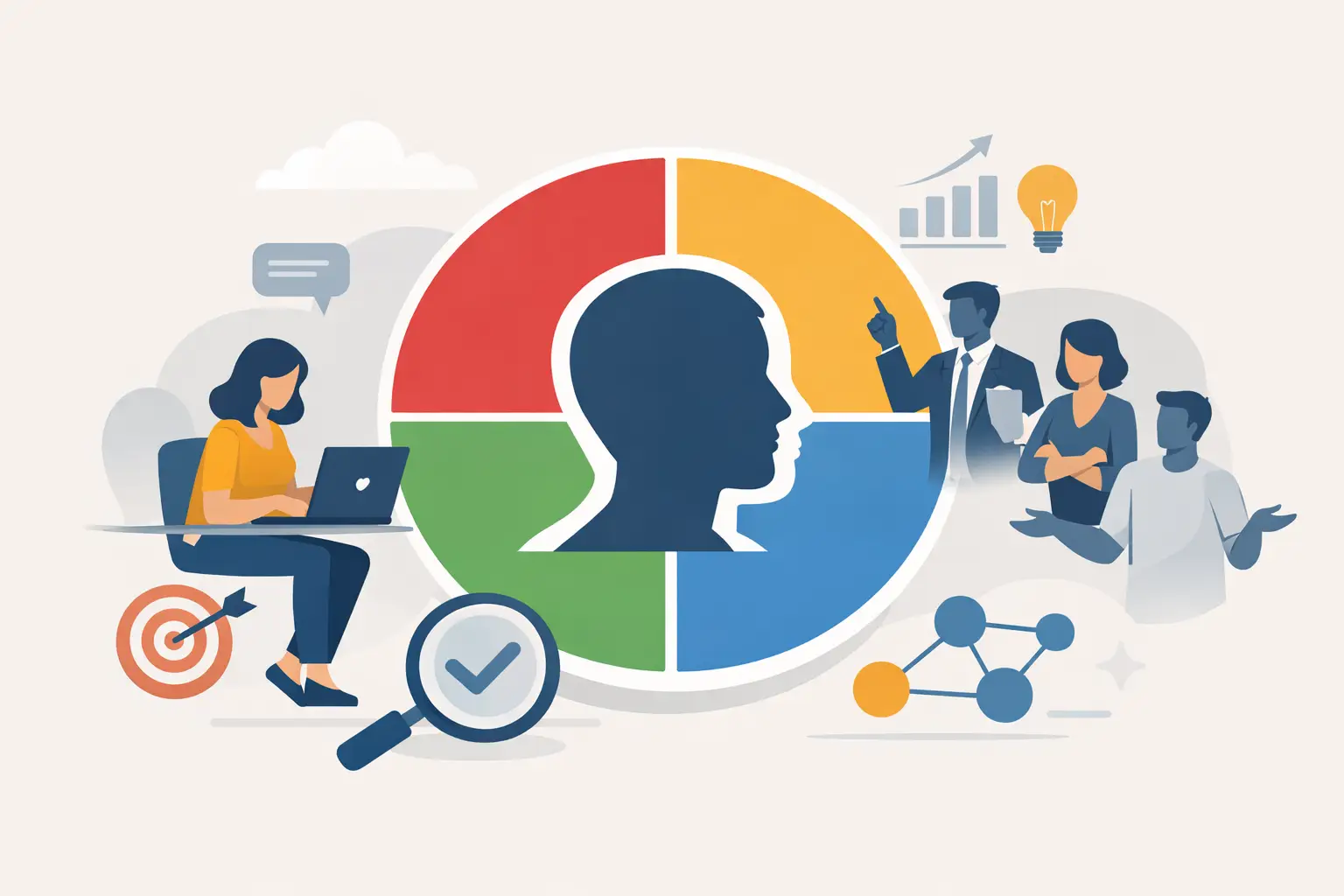
A resume can tell you where someone has worked. An interview can tell you how well they speak about that work. An online disc test helps answer a different question: how is this person likely to behave on the job when pace, pressure, and people dynamics are real.
That distinction matters. Behavioral style affects communication, teamwork, leadership approach, customer interactions, and how a person responds to change. For HR leaders, consultants, and hiring managers, the value of DISC is not in labeling people. It is in adding structured behavioral insight to decisions that are often made with too much subjectivity.
What an online DISC test actually measures
An online disc test is designed to identify observable behavioral tendencies across four primary dimensions: Dominance, Influence, Steadiness, and Compliance. These dimensions do not measure intelligence, values, technical ability, or mental health. They focus on how a person tends to approach tasks, people, pace, and rules.
Dominance reflects how someone handles problems, challenge, and control. Influence points to social interaction, persuasion, and expressiveness. Steadiness relates to pace, consistency, patience, and cooperation. Compliance reflects structure, precision, and attention to standards.
Used correctly, these dimensions provide a practical language for understanding workplace behavior. A high-D sales leader may move quickly and push hard for results. A high-S team member may stabilize the group and maintain strong follow-through. A high-C analyst may reduce errors and improve process discipline. None of those styles is inherently better. The question is whether the role and environment match the person well enough to support performance.
Why organizations use an online DISC test
Most organizations do not need more data for its own sake. They need better decision quality. That is where an online DISC test can be useful.
In hiring, DISC can help clarify whether a candidate’s behavioral style aligns with the demands of the role. A position that requires constant prospecting, fast decision-making, and frequent rejection may call for a different behavioral profile than one built around detail accuracy, policy adherence, and predictable workflow. The assessment should not replace interviews or experience review, but it can sharpen both.
In employee development, DISC creates a common framework for coaching. Managers can use results to understand how an employee prefers feedback, how they may react under pressure, and where communication friction is likely to occur. For teams, it can reduce avoidable conflict by helping people recognize differences in style before they become performance issues.
Leadership development is another common use case. DISC does not identify leadership potential by itself, but it can highlight leadership tendencies, blind spots, and adaptation needs. A highly assertive leader may need coaching on listening and patience. A highly steady leader may need support with difficult accountability conversations. The insight is most valuable when tied to a clear performance context.
The strengths and limits of online DISC testing
The practical appeal of DISC is easy to understand. It is accessible, easy to interpret, and directly relevant to workplace interaction. Compared with more abstract assessments, it often gains quick adoption among managers because the language maps cleanly to everyday behavior.
That said, there are limits. DISC is not a complete predictor of job success. Strong performers also need relevant skills, problem-solving ability, motivation, judgment, and role-specific knowledge. A person may have a style that appears to fit a job and still struggle because the competencies are not there. The opposite can also happen. Someone may not look like the “ideal” style on paper but succeeds because of experience, adaptability, and strong management support.
There is also a difference between a casual personality quiz and a validated behavioral assessment used in a business setting. Not every online disc test on the market offers the same level of reliability, reporting quality, or legal defensibility. For employers, that difference is not academic. If assessment results influence hiring or promotion decisions, the tool should be built and used with rigor.
How to evaluate an online DISC test for business use
If the goal is better talent decisions, the assessment itself matters as much as the concept behind it. A low-cost generic report may be fine for informal team discussion. It is not enough for structured selection or high-stakes development work.
Start with validation. Ask whether the assessment has evidence of reliability and whether the provider can explain how the instrument was developed and tested. Business users should also look at benchmark relevance. Generic feedback has limited value if it does not connect to job demands, performance expectations, or development priorities.
Reporting is equally important. Good reports move beyond simple trait descriptions and translate behavior into practical implications. That includes communication tendencies, likely motivators, potential stress responses, and coaching considerations. The most useful platforms also support role fit, interview guidance, and integration with broader talent processes.
Administration matters too. An online DISC test should be easy for candidates and employees to complete, but convenience should not come at the cost of interpretation quality. Results are more useful when managers, consultants, or HR leaders understand how to apply them responsibly. That usually means training, support, or clear implementation guidance.
Using DISC in hiring without overreaching
The most common mistake with DISC in hiring is using it as a shortcut. A behavioral profile should inform a decision, not make the decision.
A better approach is to define the behavioral demands of the role first. What pace does the job require? How much autonomy, persuasion, structure, collaboration, or change tolerance is involved? Once those expectations are clear, an online disc test can help compare candidate style with job realities.
The next step is integration. Use the results to ask better interview questions. If a candidate shows strong assertiveness and low patience, ask about situations that required careful collaboration or detailed follow-through. If the profile suggests high compliance and lower social influence, explore how the person handles ambiguity, negotiation, or high-contact customer work. The point is not to confirm a stereotype. It is to test for behavioral fit in a disciplined way.
This is also where trade-offs matter. A profile that fits one part of the role may create risk in another. A highly influential candidate may energize clients but struggle with documentation. A highly compliant candidate may protect quality but slow decision-making in a fast-moving environment. Good hiring decisions account for both strengths and likely management requirements.
Using DISC for development after the hire
Post-hire, DISC often becomes more valuable because managers can connect the results to actual behavior and performance patterns. Development conversations get more specific when there is a shared language for style.
For individual coaching, the assessment can help employees understand why certain tasks drain them, why some colleagues are easy to work with and others are not, and where adjustment may improve performance. This is especially useful for new managers, sales professionals, and team leads whose success depends heavily on influencing others.
For teams, DISC can improve working relationships when used with maturity. It should not become an excuse for fixed labels such as “that is just how I am.” The real benefit comes from adaptation. A direct communicator can learn to slow down with a more deliberate colleague. A cautious employee can learn when speed matters more than perfection. Behavioral awareness only creates value when it changes behavior.
Organizations that get the most from DISC usually place it inside a broader talent strategy. That may include cognitive measures, structured interviews, competency models, 360 feedback, and role-specific assessments. In that context, DISC adds a practical behavioral lens rather than carrying the full weight of the decision.
Where an online DISC test fits in a validated talent strategy
For employers that care about reducing mis-hires and improving workforce performance, the question is not whether behavior matters. It does. The question is how much confidence you want in the way you measure and apply it.
A validated online disc test can improve hiring discipline, strengthen coaching, and help teams work more effectively. But its value depends on fit, implementation, and interpretation. Used casually, it becomes a conversation starter. Used well, it becomes part of a more reliable decision process.
That is why experienced assessment providers focus on business application, not just report delivery. Maximum Potential, for example, has long positioned DISC-based tools within a broader selection and development framework because organizations rarely solve talent problems with a single instrument.
If you are considering an online disc test, start with the business outcome you need to improve. Better hiring consistency, stronger manager communication, more targeted development, and clearer role fit are all valid goals. The right assessment process should make those decisions more informed, more consistent, and easier to defend.
Behavioral insight is most useful when it helps people perform better together. That is the standard worth holding.












Leave A Comment