
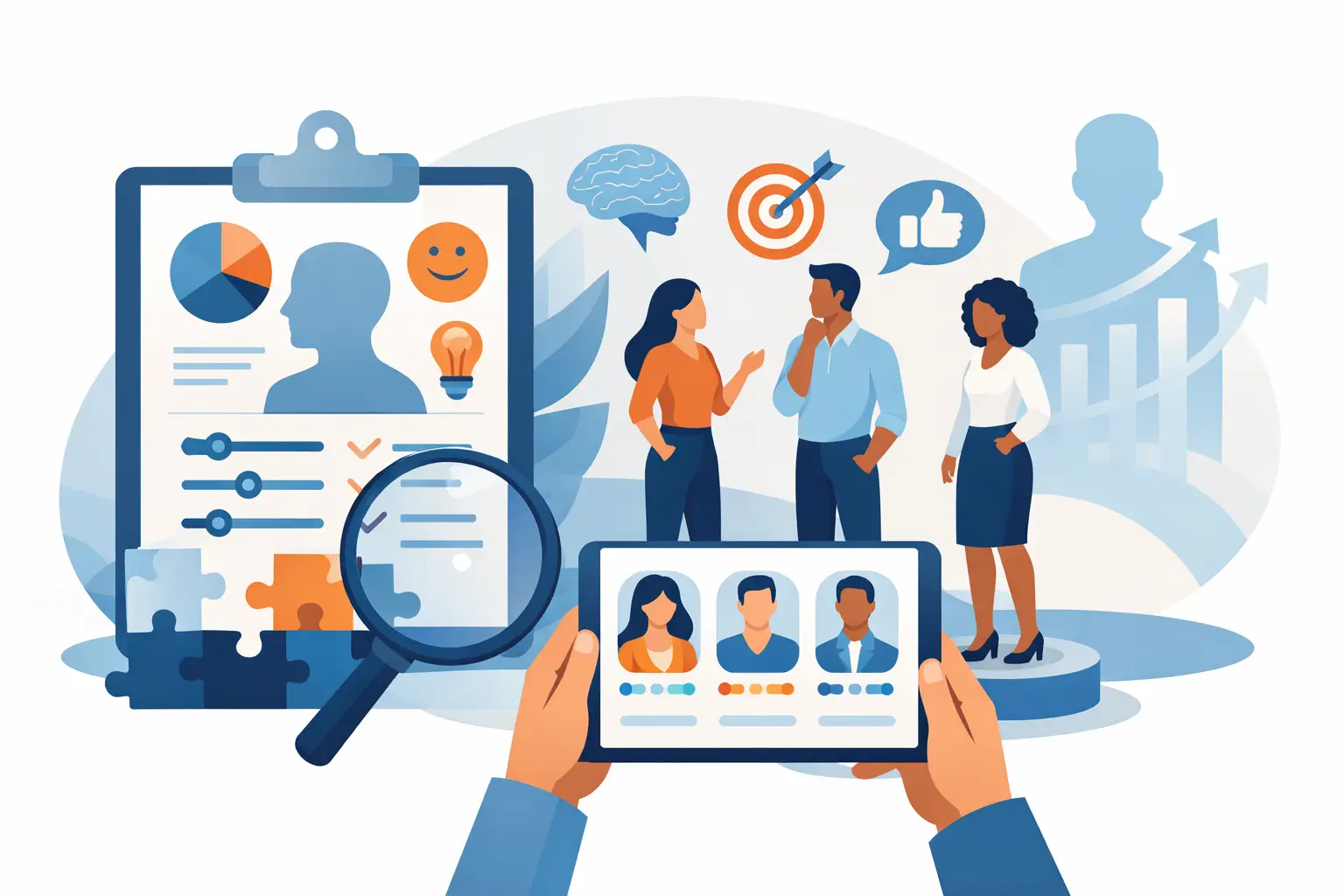
A strong resume can still lead to a poor hire. Most hiring teams have seen it happen – the candidate interviews well, has the right experience, and then struggles in the actual role. In many cases, the gap is not skill. It is work style, behavioral fit, and how the person is likely to operate under pressure. That is where personality assessment adds value.
For HR leaders, consultants, and decision-makers, personality assessment is not about labeling people or reducing talent decisions to a single score. Used correctly, it is a structured way to understand behavioral tendencies that influence performance, communication, motivation, and fit. It gives organizations better data before hiring and better insight after hire.
What personality assessment measures
A personality assessment evaluates consistent patterns in how people tend to behave, respond, and interact. In a workplace setting, that usually means examining factors such as pace, sociability, assertiveness, compliance, decision style, and adaptability. These traits do not tell you whether someone can perform a job on their own. They help clarify how that person is likely to approach the job.
That distinction matters. Personality data should not be treated as a replacement for interviews, cognitive measures, job knowledge, or background checks. It works best as part of a broader decision framework. When organizations expect too much from one assessment, they often misuse it. When they use it to sharpen judgment, improve consistency, and support job fit, the results are far more useful.
In practical terms, a personality assessment can help explain why one candidate may thrive in a fast-moving sales environment while another may be better suited for a role requiring patience, process discipline, and steady follow-through. Neither profile is inherently better. The question is whether the profile aligns with the demands of the role.
Why personality assessment matters in hiring
Hiring errors are expensive, and the cost is not limited to recruiting spend. A poor fit can affect team morale, manager time, customer relationships, training investment, and productivity. Many organizations try to solve that problem with more interviews, but unstructured interviews often increase subjectivity instead of reducing it.
A validated personality assessment introduces a more disciplined layer of information. It helps hiring teams move beyond first impressions and compare candidates against role-relevant behavioral patterns. That improves decision quality, especially when multiple interviewers are involved and opinions vary.
The value is strongest when the assessment is tied to a clear success model. If a role requires persistence, responsiveness, and a high level of interpersonal engagement, those traits should be defined in advance. If another role requires detail orientation, consistency, and comfort with structure, the benchmark should reflect that reality. Without job relevance, assessment data loses precision.
This is also where many organizations make a costly mistake. They use the same profile expectations across very different jobs. A high-performing account executive, operations coordinator, and plant supervisor may all contribute at a high level, but they often succeed through different behavioral patterns. Effective assessment strategy respects those differences.
The difference between validated tools and generic tests
Not all assessments offer the same level of value. Some tools are built for entertainment or broad self-reflection. Others are designed for employment decisions and backed by validation research, job relevance, and consistent administration standards. That difference is critical.
A validated assessment is developed to produce reliable results and meaningful interpretation in a business context. It should measure traits consistently, support fair use, and connect to outcomes that matter, such as sales effectiveness, leadership capability, service orientation, or behavioral fit. Without that foundation, organizations risk making decisions based on weak or misleading data.
For employers and consultants, this is not a minor technical detail. If an assessment influences hiring or development decisions, decision quality depends on the strength of the instrument. A tool that is easy to administer but difficult to defend will not help much when stakes are high.
That is one reason experienced HR teams look for more than a report. They look for a system that combines validated assessment data with implementation support, role alignment, and practical interpretation. Data alone does not improve hiring. Better decisions do.
Using personality assessment beyond selection
The strongest return often comes when assessment data continues to be used after the hire. A candidate report may support selection, but the same behavioral insight can also help managers onboard more effectively, coach with more precision, and reduce avoidable friction during the first year.
For example, a new hire with a highly independent style may respond well to clear outcomes and room to execute, while another may need more frequent feedback and defined checkpoints early on. If managers understand those patterns, they can adapt without lowering standards. That improves ramp-up time and manager effectiveness.
Personality assessment can also support internal development. In leadership programs, it helps individuals understand how their style affects communication, delegation, conflict, and team trust. In succession planning, it can add another layer of insight when evaluating leadership potential alongside performance history and competency data.
The same principle applies in coaching and 360 feedback. Behavioral patterns give context to feedback themes. If a leader is consistently viewed as decisive but difficult to approach, personality data may help explain that pattern and guide a more targeted development plan.
Where personality assessment helps most
The best use cases are roles where behavior has a strong influence on outcomes. Sales roles are an obvious example because resilience, assertiveness, and interaction style often affect performance. Customer service roles also benefit from assessment when patience, responsiveness, and emotional control are central to success.
Leadership roles are another strong fit. A candidate may have operational expertise, but leadership success also depends on communication style, influence, accountability, and the ability to function under pressure. Personality assessment does not answer every leadership question, but it often surfaces areas that interviews miss.
That said, usefulness depends on context. In some highly technical roles, behavioral fit may matter less than specialized knowledge or certifications. In others, especially team-based environments, behavioral mismatch can undermine performance even when technical skill is strong. The right balance depends on the job.
Common mistakes in personality assessment
The most common mistake is treating the assessment as a pass-fail test. Personality data should inform decisions, not make them in isolation. When a report becomes the entire decision, nuance disappears.
Another mistake is using assessments without a clear job target. If success has not been defined behaviorally, hiring teams tend to interpret reports based on personal preference. That defeats the purpose of a structured process and can reinforce bias instead of reducing it.
A third issue is poor communication. Candidates and employees are more likely to trust the process when organizations explain that the goal is fit, performance, and development – not judgment. Transparency matters, especially when assessments are part of a broader hiring workflow.
Finally, many companies underuse the data they collect. They administer an assessment, make a hire, and never revisit the insight. That leaves value on the table. Good assessment practice extends into onboarding, coaching, team dynamics, and development planning.
Building a better assessment process
A better process starts with role clarity. Before selecting any personality assessment, define what success looks like in the job. Identify the behavioral demands, work environment, manager expectations, and performance pressures that shape the role.
Next, choose a validated tool designed for workplace use. The assessment should be relevant to the decision at hand, whether that is hiring, leadership development, sales selection, or team effectiveness. It should also produce reports that are practical enough for managers, recruiters, and consultants to use consistently.
Then integrate the assessment into a broader workflow. Pair it with interviews, competency data, reference checks, and other relevant screening methods. The goal is not to create more steps for the sake of process. It is to improve confidence and reduce preventable errors.
Finally, train the people who will interpret the results. Even a strong tool can be misapplied if hiring managers read reports too literally or rely on them without context. The organizations that get the best outcomes usually have a disciplined approach to interpretation and follow-through. That is where experienced assessment partners such as Maximum Potential can make the process more useful and more defensible.
A personality assessment is most valuable when it helps people make better talent decisions with fewer assumptions. Used with discipline, it sharpens hiring, strengthens development, and gives organizations a clearer view of how people are likely to perform in the real conditions of work.












Leave A Comment