
A resume can tell you where someone has worked. An interview can tell you how well they present. Neither tells you, with much consistency, how that person is likely to behave under pressure, respond to structure, influence others, or adapt to pace. That is why many employers consider a DISC assessment for hiring as part of a more disciplined selection process.
Used correctly, DISC adds practical behavioral insight at the point where hiring teams often rely too heavily on instinct. It helps clarify how a candidate is likely to approach communication, decision-making, collaboration, and work tempo. For organizations trying to reduce mis-hires, improve role fit, and make more confident decisions, that information matters.
What a DISC assessment for hiring actually measures
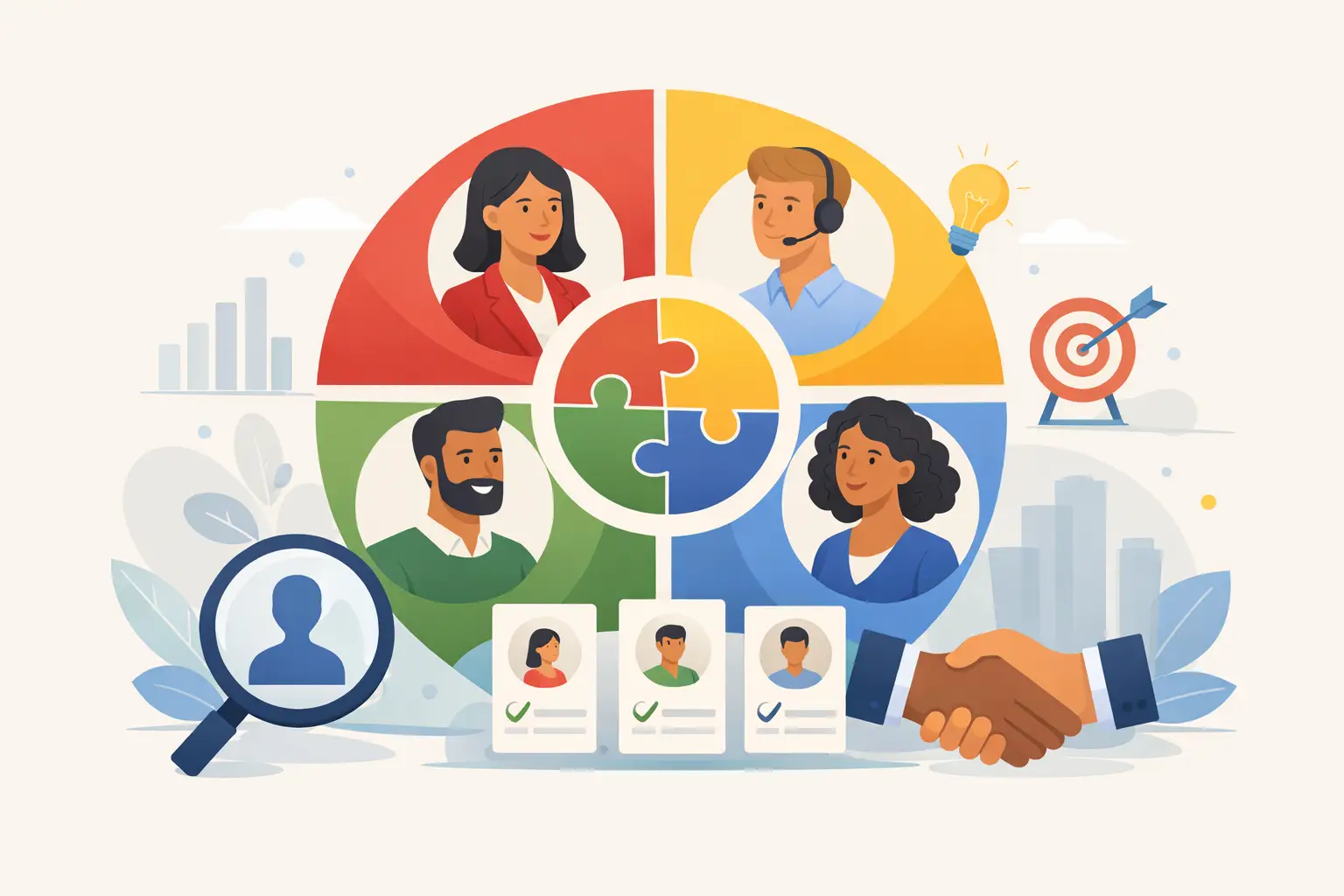
DISC is a behavioral framework that evaluates observable workplace tendencies across four core dimensions – Dominance, Influence, Steadiness, and Compliance. In hiring, the value is not in labeling people. The value is in understanding how behavioral style may align with the demands of a specific role and environment.
A higher Dominance style may indicate directness, urgency, and comfort with challenge. A higher Influence style may suggest persuasiveness, sociability, and verbal energy. A stronger Steadiness pattern can point to patience, consistency, and a preference for stability. A stronger Compliance pattern often reflects attention to detail, structure, and quality standards.
None of these styles is inherently better than another. That is a critical point in selection. Behavioral strengths depend on the job. A fast-growth sales role may reward assertiveness and social confidence. A regulated operations role may require precision, consistency, and process discipline. Hiring teams get into trouble when they confuse personal preference with actual job fit.
Where DISC helps in the hiring process
The most useful role for DISC is decision support. It gives hiring managers and recruiters a structured way to examine behavioral fit before extending an offer. That can improve interviews, sharpen comparisons between finalists, and reduce avoidable mismatches.
DISC is especially helpful when the role has a clear behavioral pattern behind success. For example, if a position requires frequent conflict resolution, self-direction, and quick judgment, the assessment can show whether a candidate is naturally energized by that environment or likely to find it draining. If a job depends on steady follow-through, patience with routine, and a calm response to repetitive demands, DISC can highlight those tendencies as well.
This is also where hiring teams gain operational value. Instead of vague interview impressions like “strong presence” or “good culture fit,” they can ask more precise questions. If a candidate’s profile suggests a strong need for autonomy, the interviewer can probe how that person responds to close supervision. If the profile indicates lower tolerance for ambiguity, the discussion can focus on how the candidate handles changing priorities.
Used this way, DISC does not replace the interview. It improves it.
The limits of DISC in selection
A DISC assessment for hiring should not be treated as a standalone pass-fail tool. It does not measure every factor that drives job success. It is not a cognitive ability test, a skills test, or a full predictor of performance on its own.
That matters because many hiring failures are multi-causal. A person can have a behavior style that fits the role and still fall short due to low technical proficiency, weak judgment, poor motivation, or a mismatch with the manager’s expectations. The reverse is true as well. Someone may not show an ideal DISC pattern on paper but can still perform strongly if the role, support structure, and culture allow that person to succeed.
This is why validation matters. DISC is most defensible and most useful when it is part of a broader assessment strategy tied to job requirements and interpreted within a structured process. Organizations that want better decision quality should combine behavioral insight with role analysis, interview discipline, and other relevant selection data.
How to use DISC assessment for hiring more effectively
The first step is to define the job before assessing the person. Too many employers start with the candidate profile and work backward. A better approach is to identify the behavior demands of the role itself. What pace does the job require? How much structure is present? How much persuasion, detail focus, independence, or persistence is truly needed?
Once those demands are clear, DISC results become more meaningful. Hiring teams can compare the candidate’s behavioral tendencies against the work environment, the manager’s style, and the performance expectations attached to the position.
The second step is to use the results to guide targeted interviewing. A profile should generate better questions, not faster conclusions. If the role requires persistence through rejection, ask for examples of how the candidate handled repeated setbacks. If the environment is highly process-driven, ask how the person responds when policy limits flexibility. If cross-functional collaboration is essential, probe for examples of adapting communication style across different stakeholders.
The third step is to keep the interpretation grounded in business outcomes. The purpose is not to decide whether someone is likable or similar to the current team. The purpose is to evaluate whether the person’s behavioral style supports the demands of performance.
Behavioral fit is not the same as culture fit
This distinction is easy to miss and costly when ignored. Culture fit is often used too loosely in hiring, sometimes as a cover for personal bias. Behavioral fit is different. It is tied to the real work of the role and the operating conditions around it.
For example, a candidate may be highly collaborative, thoughtful, and relationship-oriented. That can be a strong behavioral asset. But if the role requires fast decisions with limited input, aggressive pursuit of new business, and comfort with confrontation, the fit may still be weak. That does not make the candidate a poor hire in general. It means the placement may be wrong.
A sound hiring process focuses on fit to role, fit to manager, and fit to work environment without reducing the decision to personality preference. DISC can support that level of discipline when used carefully.
Common mistakes employers make with DISC
One common mistake is overgeneralizing the profile. Hiring teams sometimes see a high Influence score and assume “great salesperson,” or a high Compliance score and assume “strong analyst.” Real performance is more complex than that. Behavioral style can support success, but it does not prove competence.
Another mistake is using DISC without a consistent framework. If every hiring manager interprets the same report differently, the tool adds noise instead of clarity. Standardized interpretation, job-based benchmarks, and trained use are essential.
A third mistake is separating pre-hire insight from post-hire development. Behavioral data becomes more valuable when it supports onboarding, manager communication, and long-term coaching after the hire. If an assessment reveals that a new employee prefers structure, feedback cadence, or a certain communication style, that information can improve ramp-up time and reduce friction early in employment.
This is one reason integrated assessment strategies tend to produce stronger returns. They support better selection decisions and better talent management after the offer is accepted.
When DISC makes the most sense
DISC is particularly useful in roles where communication style, pace, adaptability, customer interaction, teamwork, and response to structure influence results. Sales, leadership, customer service, operations, and many people-management positions can benefit from behavioral insight when the role has been clearly defined.
It can also be valuable for organizations hiring at scale. In those environments, consistency matters. A structured behavioral assessment can help recruiters and hiring managers work from a shared language rather than a collection of individual opinions.
That said, not every role requires the same depth of behavioral analysis. For highly technical jobs with narrow skill requirements, other assessment methods may carry more weight. The best approach depends on what the role actually demands and what the organization is trying to predict.
A better hiring decision starts with better inputs
DISC can improve hiring decisions when it is used for what it does well: revealing behavioral tendencies that interviews and resumes often miss. It helps employers ask sharper questions, evaluate fit more objectively, and make decisions with more confidence. But its value depends on discipline. The tool must be job-related, interpreted properly, and positioned as one part of a validated selection process.
For organizations that want to hire more accurately the first time, behavioral assessment should not be an afterthought. It should be part of a decision framework built around performance, fit, and long-term success. That is where experienced assessment partners such as Maximum Potential bring the most value – not by adding more data, but by helping employers use the right data well.
The strongest hiring systems are rarely built on intuition alone. They are built on better evidence, applied with judgment.












Leave A Comment