
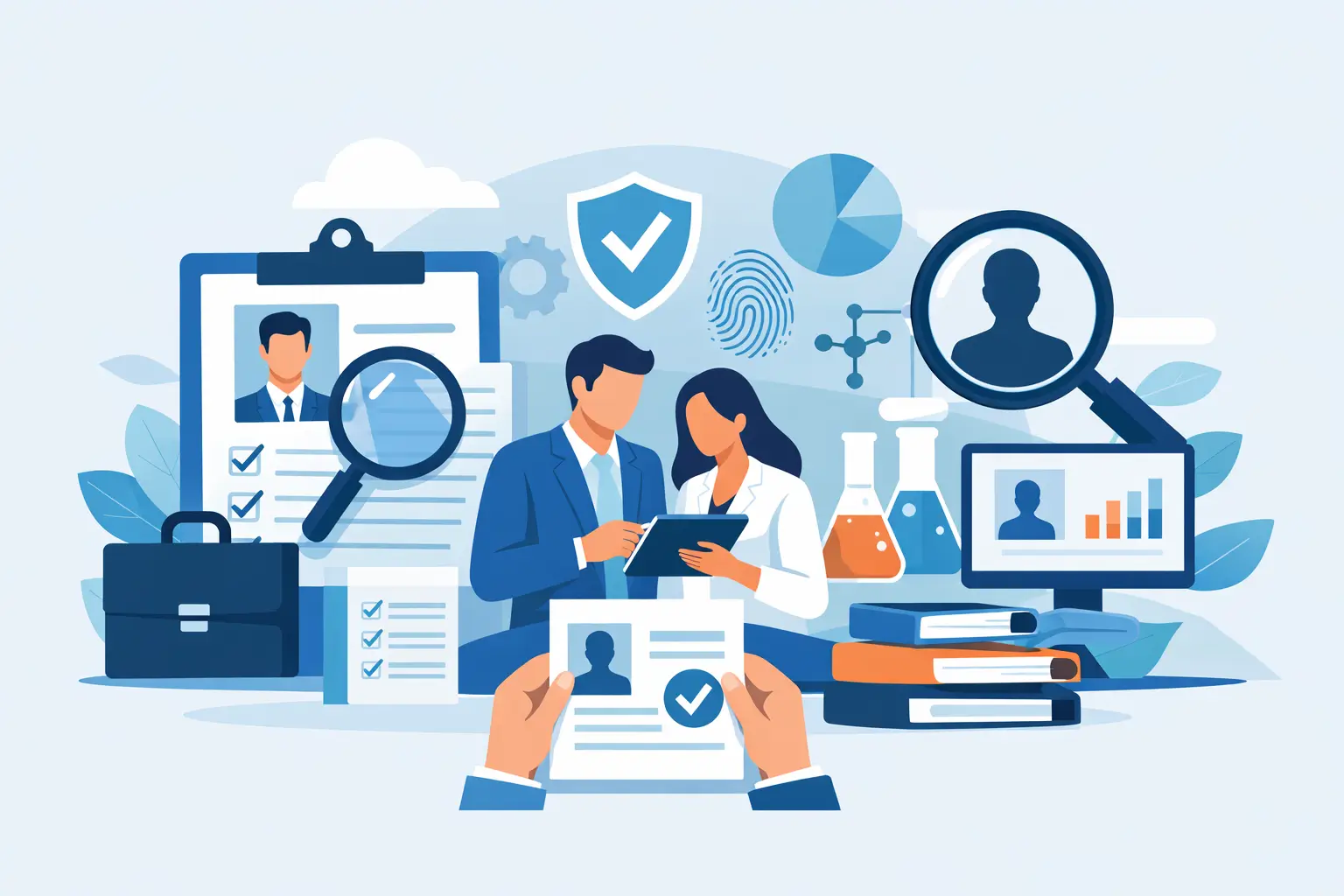
A resume can tell you where someone has worked. It cannot tell you, with enough confidence, how that person will perform, how they will respond under pressure, or whether they are likely to fit the role and culture you are hiring for. That is why the top pre employment screening methods matter. They give hiring teams better evidence before they make an expensive decision.
For HR leaders, consultants, and business decision-makers, the goal is not to add more hurdles to the hiring process. It is to improve decision quality. The best screening approach helps you predict performance, reduce avoidable risk, and move candidates through the process efficiently. No single method does all of that on its own, which is why effective employers use a structured combination.
What makes pre employment screening effective
Good screening does two things at once. First, it verifies whether a candidate meets the objective requirements of the job. Second, it improves your ability to forecast success in the role. Those are related, but they are not the same.
A candidate may pass a background check and still be a poor behavioral fit. Another may interview well but lack the judgment, motivation, or work style needed for sustained performance. Strong screening methods address both sides of the hiring equation: risk reduction and performance prediction.
That is also where validation matters. If a screening tool is not tied clearly to job requirements and business outcomes, it may create extra process without improving hiring results. The top pre employment screening methods are useful because they help employers make more consistent, more defensible, and more informed decisions.
The top pre employment screening methods employers rely on
1. Behavioral and personality assessments
Behavioral assessments are one of the most effective tools for understanding how a candidate is likely to operate on the job. They can help hiring teams evaluate communication style, pace, decision tendencies, interpersonal approach, and likely fit with role demands.
This matters most in positions where success depends on more than technical skill. Sales roles, leadership positions, customer-facing jobs, and team-based environments often benefit from this type of screening because behavior affects performance every day.
The value here is not in labeling people as good or bad. It is in measuring fit. A fast-paced, highly persuasive role may require very different tendencies than a detail-driven compliance position. When behavioral data is used appropriately, it gives employers another layer of evidence that interviews alone often miss.
2. Cognitive and aptitude testing
Cognitive assessments measure a candidate’s ability to solve problems, process information, learn quickly, and apply reasoning. For many roles, especially those that involve complexity, judgment, or adaptation, this can be a strong predictor of performance.
These tests are particularly useful when employers need to evaluate candidates from varied backgrounds on a common standard. Degrees, job titles, and years of experience do not always reflect actual capacity to learn or handle complexity. Aptitude testing can help close that gap.
That said, it should be used carefully and in line with the job. A highly analytical assessment may add little value for a role that depends more on interpersonal persistence or procedural consistency. The method works best when the cognitive demand of the test matches the cognitive demand of the position.
3. Structured interviews
Interviews remain a core part of hiring, but unstructured interviews are often weak predictors of job success. They can be inconsistent, subjective, and overly influenced by first impressions. A structured interview corrects for that by asking each candidate the same job-related questions and using defined scoring criteria.
This approach improves fairness and comparison across applicants. It also helps interviewers focus on behaviors, examples, and competencies that actually matter in the role instead of relying on conversational chemistry.
For organizations that want better hiring outcomes without dramatically changing their process, structured interviews are one of the most practical improvements available. They do not replace assessments or verification tools, but they often make the rest of the screening process more effective.
Using top pre employment screening methods to reduce risk
4. Reference checks
Reference checks are still valuable when they are done with discipline. Too often, they are treated as a final formality rather than a source of useful evidence. A well-designed reference process can confirm patterns related to reliability, teamwork, leadership, work habits, and rehire eligibility.
The key is consistency. Vague questions produce vague answers. Focused questions tied to job performance tend to produce better information. Automated reference checking can also improve speed and documentation, especially for higher-volume hiring environments.
Reference checks should not carry the entire burden of validation. Past supervisors may be cautious in what they share, and not every reference is equally objective. Still, when used alongside assessments and structured interviews, they can strengthen confidence in the final decision.
5. Background screening
Background screening helps employers verify identity, employment history, education, criminal records where relevant, and other key credentials. For many organizations, this is a baseline risk management practice rather than a differentiator.
Its value is straightforward. Hiring on false information creates legal, operational, and reputational exposure. Background screening helps confirm that the candidate is who they claim to be and has the qualifications presented.
The trade-off is that background checks are often backward-looking. They can identify discrepancies and risks, but they are not designed to predict future performance or fit. That is why they are necessary in many roles, but not sufficient on their own.
6. Drug testing
Drug testing is role-specific, but in safety-sensitive environments it can be a critical part of pre-hire screening. Industries with transportation, manufacturing, healthcare, field operations, or compliance obligations often include testing as part of a standard hiring workflow.
The practical benefit is risk reduction. Employers may use drug screening to support workplace safety, meet regulatory requirements, and reduce liability exposure. Oral drug testing can be especially useful when timeliness, observed collection, and ease of administration are priorities.
As with any screening method, relevance matters. Employers should be clear about why the test is used, which jobs require it, and how the process aligns with policy and applicable law.
7. Job simulations and skills testing
If you want to know whether someone can do the work, asking them to demonstrate the work is often one of the most direct methods available. Skills tests and job simulations measure actual capability in areas such as software use, writing, sales conversations, problem solving, or technical execution.
This method is especially useful when the role has clear performance tasks that can be sampled before hire. It reduces dependence on self-reported ability and gives hiring teams concrete evidence of current readiness.
The limitation is that simulations can take more time to design and administer. They are most effective when tightly connected to essential job functions rather than generic exercises. When done well, they are among the strongest tools for assessing immediate competence.
How to build the right screening mix
The right process depends on the role, the level of risk, and the cost of a bad hire. An entry-level operational job may require a different mix than a sales leadership role or a regulated healthcare position. That is why screening should be designed around role requirements, not applied as a one-size-fits-all package.
For many employers, the strongest process combines three layers. One layer verifies facts through background checks, references, and where appropriate drug testing. Another evaluates likely fit and potential through behavioral or cognitive assessments. The third measures capability through structured interviews or skills testing.
This combination gives hiring teams a more complete picture. It reduces the chance of overvaluing a polished interview, overlooking a misalignment in work style, or missing a material risk factor. It also supports more consistent hiring decisions across managers and locations.
Organizations that take a validation-focused approach tend to get more value from screening because they are not collecting data for its own sake. They are using targeted tools to answer specific hiring questions. Maximum Potential has long operated in this space with that practical standard in mind: better information should lead to better talent decisions.
Common mistakes that weaken screening results
The most common mistake is relying too heavily on one method. Interviews alone create bias. Background checks alone do not predict performance. Assessment data alone can be misused if it is not interpreted in the context of the role.
Another mistake is adding tools without defining the decision they are meant to support. Every screening method should have a clear purpose. Are you verifying credentials, measuring judgment, identifying behavioral fit, or evaluating sales potential? If the answer is unclear, the process may be adding friction without adding insight.
Finally, speed should not come at the expense of structure. Hiring teams often feel pressure to move quickly, especially in competitive labor markets. But a rushed process usually costs more later through turnover, underperformance, and rehiring.
The best screening systems are not the most complicated. They are the ones that help you hire with clearer evidence, stronger consistency, and fewer avoidable surprises. If your current process still depends mostly on resumes and instinct, that is usually the next place to improve.












Leave A Comment