
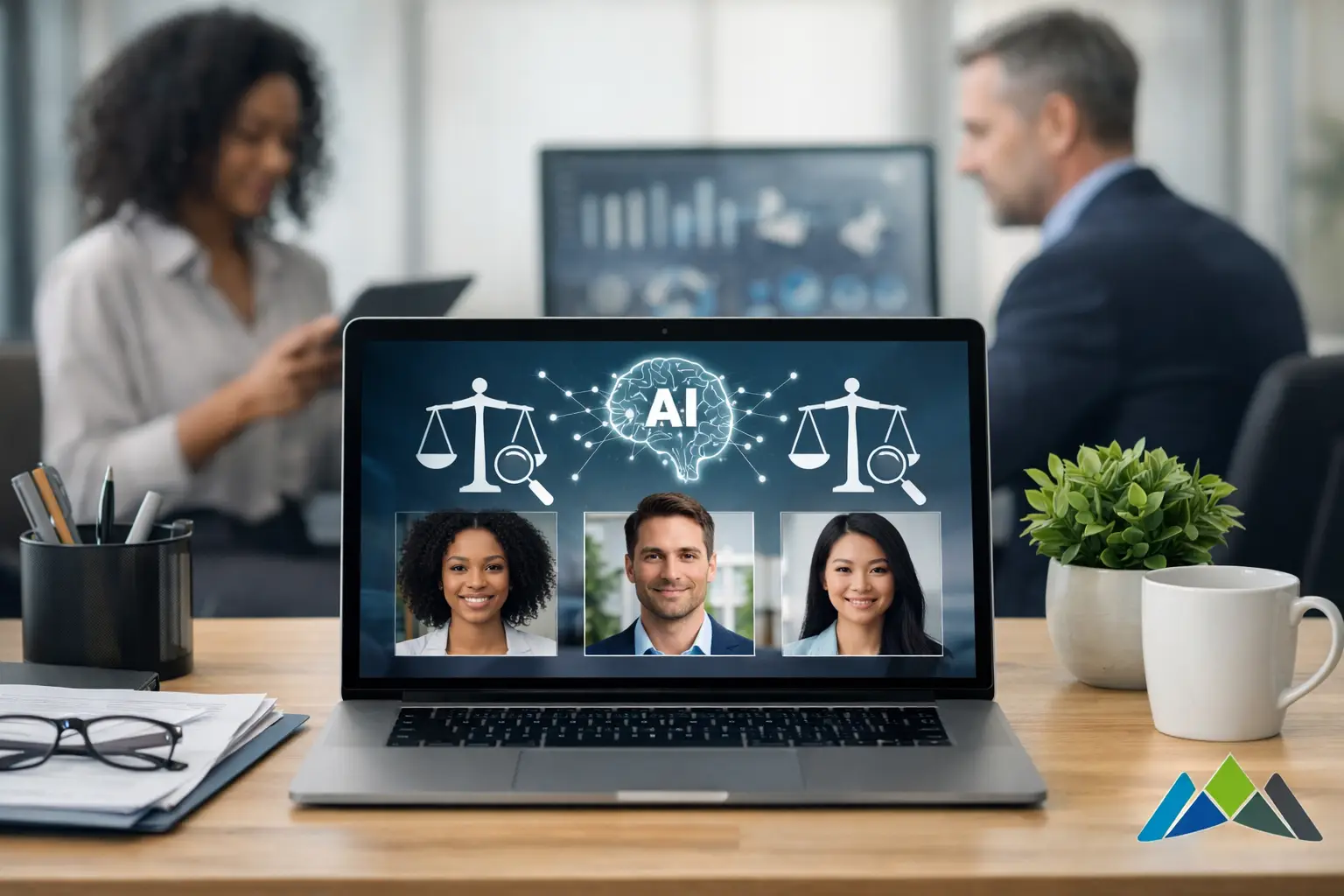
A hiring platform can produce a polished candidate score, a ranked shortlist, and a detailed dashboard while still creating material risk for the organization. The best employee selection tools with built-in AI bias audits do more than automate screening. They give HR and talent leaders evidence that the process is job-related, consistently applied, monitored for adverse impact, and open to meaningful human review.
That distinction matters. AI can improve speed and consistency in selection, but it does not make a process valid by default. If the model relies on weak job criteria, incomplete data, or historical hiring patterns that reflect past inequities, the technology can scale poor decisions faster. The right tool supports better decision quality rather than replacing it.
What Built-In AI Bias Audits Should Actually Mean
The phrase “bias audit” is used broadly in the hiring technology market. Some providers use it to describe basic fairness statements or model documentation. Others offer recurring statistical monitoring, independent audit support, explainability features, and controls that allow employers to investigate potentially disparate outcomes.
For a selection tool to provide meaningful built-in AI bias auditing, it should address three separate questions. First, does the tool evaluate candidates against job-relevant factors? Second, do outcomes differ materially across protected groups or other relevant demographic categories? Third, can the employer understand, document, and correct a problem when a disparity appears?
A useful audit capability typically includes ongoing adverse impact analysis, rather than a one-time check completed before launch. It should allow administrators to review selection rates at each stage of the process, including screening, assessment, interview scoring, and final disposition. It should also preserve the data needed to explain how a recommendation was generated and who made the final decision.
Fairness monitoring is not the same as compliance. A vendor dashboard cannot eliminate an employer’s legal responsibilities under federal, state, or local requirements. It can, however, provide the evidence and operating controls needed to manage those responsibilities more effectively.
The Best Employee Selection Tools With Built-In AI Bias Audits
There is no single best platform for every organization. A high-volume employer hiring customer service representatives has different needs from a consulting firm selecting senior leaders or a distributor supporting multiple client organizations. The strongest choice depends on the role, hiring volume, countries involved, existing systems, and the level of assessment rigor required.
The most capable options generally fall into four practical categories.
AI recruiting platforms with workflow-level monitoring
These platforms use AI to support sourcing, screening, matching, scheduling, candidate communications, or interview workflow. Their audit functions may monitor recommendation patterns and identify whether certain groups are being disproportionately filtered out.
They can be useful when the main business problem is recruiting scale. However, employers should look closely at what is being audited. Monitoring the final shortlist alone is not enough if the system has already used automated criteria to deprioritize qualified candidates earlier in the funnel.
Ask whether the platform can report selection rates by stage, whether it can separate recruiter actions from system recommendations, and whether it maintains an audit trail of model changes. A tool that cannot distinguish these events makes it harder to identify the source of a disparity.
Structured interview platforms with scoring controls
Interview technology can reduce inconsistency when it guides interviewers through standardized, job-related questions and uses anchored scoring criteria. AI features may summarize notes, flag incomplete evaluations, or detect scoring patterns that deserve review.
This category is often a sensible choice for organizations that want better hiring discipline without allowing an algorithm to make high-stakes recommendations. The best systems preserve the structured evidence behind each rating, show where interviewers diverge, and make it possible to review whether scoring differs across demographic groups.
The trade-off is operational. Structured interviews work only when hiring managers are trained, questions are tied to the job, and scoring standards are enforced. Technology can support that discipline, but it cannot create it on its own.
Assessment platforms with validated selection measures
For employers making consequential hiring decisions, validated assessments remain central. Behavioral, cognitive, skills, sales, and work-sample assessments can provide useful decision data when they are relevant to role requirements, administered consistently, and interpreted within their intended purpose.
AI bias audit functions are most valuable here when they sit alongside validation evidence. A platform should be able to show the assessment’s relationship to job performance, document score use, monitor group outcomes, and help employers evaluate cut scores or decision rules. An audit that examines demographics without examining job relatedness is incomplete.
Maximum Potential’s assessment approach reflects this principle: better selection decisions require validated measures, practical interpretation, and a process that can continue supporting development after the hire. For consultants and employers, the goal is not merely to generate another score. It is to use defensible information that improves fit and performance.
Talent intelligence platforms with governance features
These systems combine internal workforce data, applicant data, skills information, and career history to recommend candidates for openings or development opportunities. Their governance tools may include model documentation, explanation views, role-based permissions, data retention controls, and periodic fairness testing.
They are most appropriate when an organization has mature data practices and enough volume to support meaningful analysis. They also require careful governance. More data does not automatically produce better recommendations, especially when job histories, titles, or performance ratings carry the effects of inconsistent past practices.
Evaluate the Audit, Not the Marketing Claim
When comparing employee selection technology, ask the vendor to demonstrate the audit process with a realistic hiring workflow. Do not settle for a general statement that the AI was designed responsibly.
Start with the model’s purpose. What specific decision does it influence: candidate ranking, interview evaluation, assessment interpretation, or final selection? The more direct the impact on an employment decision, the higher the standard for documentation, oversight, and validation should be.
Next, examine the data used by the system. A vendor should be able to explain the inputs, the information excluded from the model, the source of training data, and the process used to detect proxy variables. For example, a model may not use race or gender directly but could still rely on factors that correlate closely with protected characteristics.
Then ask how often outcomes are tested. Annual review may be insufficient for high-volume hiring or a model that changes frequently. Monitoring should occur often enough to detect issues before they become embedded in a large number of decisions. The process should also define who receives alerts, who investigates them, and what corrective action is available.
Finally, clarify the role of independent review. Internal vendor testing is valuable, but organizations should understand whether the tool can support third-party audit requirements and provide the underlying records necessary for their own legal counsel, industrial-organizational psychologists, or compliance team.
Selection Criteria That Protect Decision Quality
A practical evaluation should balance fairness controls with predictive value, usability, and implementation discipline. Consider these factors together:
- Job relevance: The tool’s measures, model inputs, and recommended actions should connect directly to documented role requirements.
- Validation evidence: Look for evidence supporting the intended use, population, and decision context rather than generic claims of accuracy.
- Adverse impact monitoring: The system should measure outcomes across each meaningful stage of selection and allow leaders to investigate disparities.
- Explainability: Recruiters and hiring managers need a clear reason for a score or recommendation, not a black-box output.
- Human oversight: The process should allow trained decision-makers to review, question, and override recommendations with documented rationale.
- Data governance: Confirm data retention, access controls, consent practices, security expectations, and reporting responsibilities.
For multinational organizations, add local legal requirements and language validity to the evaluation. A measure validated in one country or job family may not transfer automatically to another. For smaller employers, the priority may be a simpler structured process with sound assessments and periodic review rather than an expansive AI platform that the team cannot govern properly.
Build a Defensible Selection Process Around the Tool
Even strong technology performs poorly when inserted into an unstructured hiring process. Begin with a current job analysis or competency model. Define the capabilities, behaviors, and performance outcomes that separate success from failure in the role. Then align screening questions, assessments, interview guides, reference checks, and final decision criteria to that definition.
Establish decision rules before candidates enter the process. Determine which criteria are required, which are weighted, who can make exceptions, and how exceptions will be documented. This improves consistency and gives fairness monitoring a meaningful baseline.
Train recruiters and managers on appropriate use. They need to understand that an AI-generated recommendation is decision support, not a substitute for judgment. They also need to know how to recognize unsupported criteria, avoid overreliance on a single score, and escalate a concern when the system’s output does not match the evidence.
The strongest hiring programs use AI bias auditing as an ongoing management practice. Review outcomes, investigate patterns, refine the process, and keep the focus on job-related evidence. That is how selection technology becomes a practical safeguard against costly hiring errors rather than another source of them.












Leave A Comment